Railroad crossing crashes continue to drop in Ohio
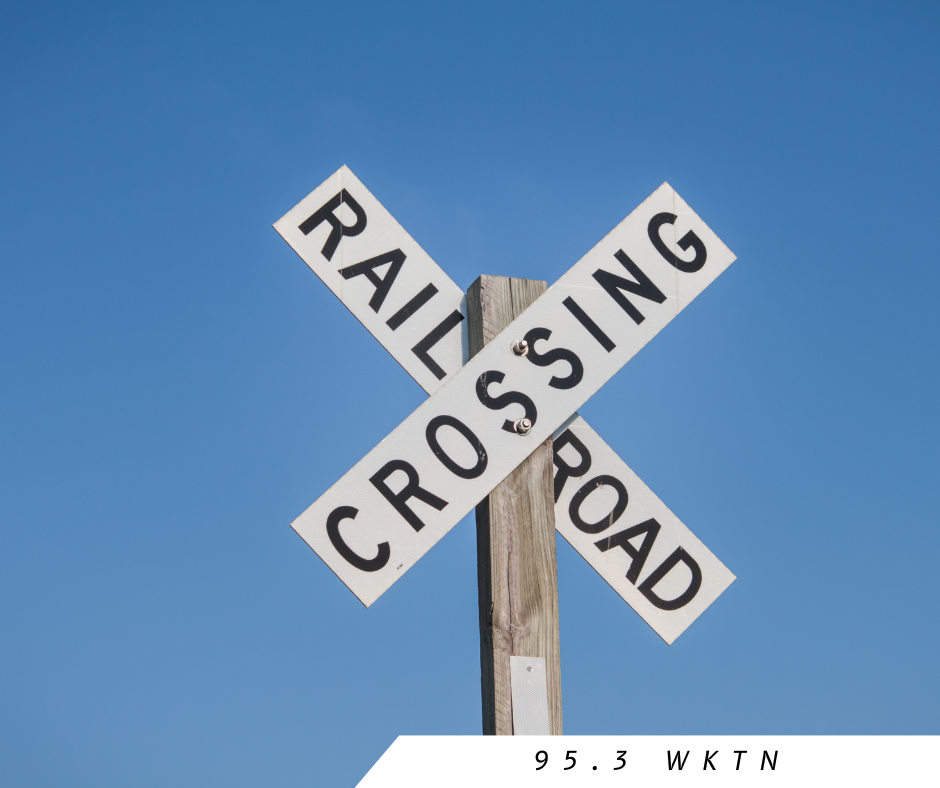
COLUMBUS, OHIO (Sept. 21, 2026) – The Public Utilities Commission of Ohio (PUCO) and the Ohio Rail Development Commission (ORDC) are participating in See Tracks, Think Train Week®, September 21-27. The week is dedicated as a reminder to Ohioans to practice safety around all rail crossings.
Every three hours, a person or vehicle is hit by a train in the United States. Crashes at rail crossings can be more severe than other collisions and are more likely to result in death and injury.
In 2025, there were 61 train-vehicle collisions at public railroad crossings in Ohio — a 50 percent decrease over the past 20 years.
More information about rail crossing crashes and safety is available in the PUCO’s newly released 2025 Rail Statistics Report.
Read the 2025 Rail Statistics report here
“Drivers and pedestrians alike should make safe choices and stay alert around railroad crossings,” said PUCO Chair Jenifer French. “Together, we can stop track tragedies and save lives.”
“We ask all drivers and pedestrians to put away distractions, wait for flashing lights to clear, and never try to beat a train,” said ODOT Director and Chair of the Ohio Rail Development Commission Pamela Boratyn. “Highway-rail grade crossing collisions and pedestrian trespass on tracks together account for more than 95 percent of all railroad fatalities. Taking just a few extra seconds to stop, look, and listen can save a life.”
The PUCO and ORDC are encouraging you to follow these steps for safety:
- Always expect a train. Trains are quieter and faster than you think, can run on any track, at any time, from either direction and do not run on schedules.
- Walking on or beside railroad tracks is illegal. This includes photo shoots!
- The only safe place to cross tracks is at designated public crossings with a crossbuck, flashing red lights or a gate. Crossing anywhere else is illegal.
- Avoid getting stuck. Before crossing in a vehicle, be sure there is space on the other side to completely clear the tracks.
- Never pass flashing lights or go around lowered gates. Always wait until lights have stopped flashing and gates are completely raised.
- Wait to cross until you can see clearly in both directions. Multiple tracks may mean multiple trains.
- Stay off railroad bridges and trestles. Stay out of railroad tunnels. There is ONLY ROOM for the train.
- Do not attempt to hop aboard railroad equipment at any time. Trains, tracks and railroad yards are NOT playgrounds. Never climb on, under or through railroad cars. Never jump on or off a train while it’s moving.
With 44 freight railroads operating approximately 5,100 miles of track and over 5,600 public grade crossings, Ohio is the fifth leading state in terms of goods transported by rail. The PUCO, in conjunction with the Ohio Rail Development Commission, is responsible for ensuring the safety of motorists and pedestrians at highway-rail grade crossings in Ohio. PUCO rail inspectors inspect the warning devices that are essential for everyone’s safety.
The Ohio Rail Hotline, at (866) 814-RAIL (7245), provides Ohioans with a toll-free resource for all railroad crossing questions. For more information on rail crossing safety, visit www.PUCO.ohio.gov.
ORDC assists Ohio companies and communities in creating and retaining jobs by preserving rail service to existing shippers and providing rail service to new customers. In addition, the ORDC funds projects to improve railroad-highway grade crossings to increase safety for the traveling public.
Please remember, when around railroad tracks always expect a train. Rail lines in Ohio are private property and trespassing is both strictly prohibited and extremely dangerous.
For additional information about ORDC, please visit www.rail.ohio.gov.